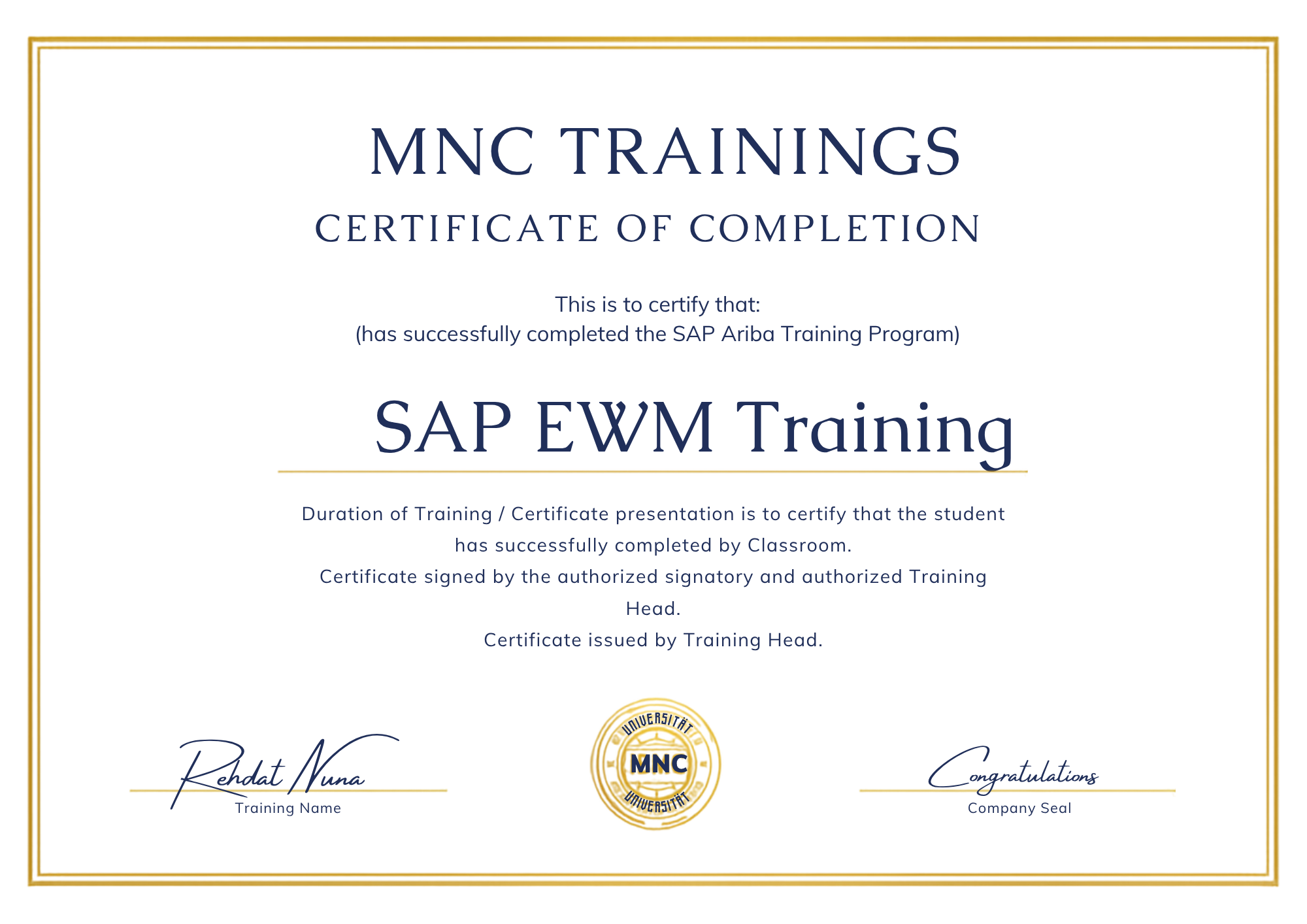
SAP EWM Training
SAP EWM Course
- 40 Hours Live Training Sessions & 5+ Softskill Classes
- 14+ Hours Project Practice & 38+ Assignments Modules
- 100+ Mock MCQs & 10+ Hours SAP EWM Exam Assistance
★ ★ ★ ★ ★ 4.9 (1931 Ratings)

Our Exclusive Course Offerings
Up skilling
Develop & reinforce skill set with upskilling aligned to your development plans offered during training
GCAO Training Model
Training Agenda is prepared post intensive training need analysis to ensure High ROI & Training Objective is met
JOB Opportunities
Crack 40,000+ SAP Job Vacancies for Experienced & Freshers certified SAP ARIBA professionals in US, & Middle East
10+ Webinars
Regular concept brush-up webinars conducted for SAP ARIBA Training Course
Comprehensive Curriculum
Follow the SAP Certification Curriculum designed in accordance with Industry needs
Experienced & Certified Trainers
Learn from Certified Trainers having 10+Years of Training Implementation Experience
Our Student Reviews
Our Course Detailed Overview
Module 1: Introduction to SAP EWM and Warehouse Management
Module 1 provides an overview of warehouse management concepts and SAP Extended Warehouse Management (EWM) functionalities. It introduces the architecture, organizational structure, and core warehouse processes.
Lessons
- Introduction to Warehouse Management
- SAP EWM Overview
- SAP EWM Architecture
- Organizational Structure
- Warehouse Structure
- Supply Chain Integration
- Master Data Overview
- Process Flow Overview
- Deployment Options
- Reporting Overview
After completing this module, students will be able to:
- Understand warehouse management concepts.
- Explain SAP EWM architecture.
- Configure organizational structures.
- Identify core warehouse processes.
Module 2: SAP EWM Master Data Management
Module 2 covers the master data components required for warehouse operations and management in SAP EWM.
Lessons
- Product Master Data
- Business Partners
- Storage Types
- Storage Sections
- Storage Bins
- Activity Areas
- Packaging Specifications
- Resource Management
- Warehouse Process Types
- Master Data Configuration
After completing this module, students will be able to:
- Configure warehouse master data.
- Manage storage structures.
- Define warehouse processes.
- Maintain EWM master records.
Module 3: Inbound Process Management
Module 3 introduces inbound logistics processes and warehouse receiving operations in SAP EWM.
Lessons
- Inbound Delivery Processing
- Goods Receipt
- Putaway Strategies
- Warehouse Tasks
- Warehouse Orders
- Deconsolidation
- Value Added Services
- Cross Docking
- Exception Handling
- Inbound Monitoring
After completing this module, students will be able to:
- Configure inbound processes.
- Manage goods receipt activities.
- Execute putaway operations.
- Monitor warehouse receipts.
Module 4: Outbound Process Management
Module 4 focuses on outbound logistics processes including picking, packing, and shipping operations.
Lessons
- Outbound Delivery Processing
- Picking Strategies
- Packing Processes
- Shipping Activities
- Warehouse Tasks
- Warehouse Orders
- Wave Management
- Transportation Units
- Loading Processes
- Outbound Monitoring
After completing this module, students will be able to:
- Configure outbound processes.
- Manage picking and packing.
- Execute shipping operations.
- Monitor outbound activities.
Module 5: Internal Warehouse Processes
Module 5 covers the internal movement of goods and warehouse optimization processes.
Lessons
- Internal Stock Transfers
- Replenishment
- Slotting
- Rearrangement
- Posting Changes
- Warehouse Reorganization
- Resource Optimization
- Workload Management
- Exception Processing
- Process Monitoring
After completing this module, students will be able to:
- Manage internal warehouse operations.
- Configure replenishment strategies.
- Optimize warehouse resources.
- Monitor warehouse activities.
Module 6: Physical Inventory Management
Module 6 provides an overview of inventory management and stock verification processes in SAP EWM.
Lessons
- Physical Inventory Concepts
- Inventory Procedures
- Cycle Counting
- Inventory Documents
- Stock Counting
- Difference Analysis
- Inventory Adjustments
- Inventory Monitoring
- Reporting
- Best Practices
After completing this module, students will be able to:
- Configure inventory processes.
- Perform stock counting activities.
- Analyze inventory differences.
- Manage inventory adjustments.
Module 7: Labor Management and Resource Optimization
Module 7 focuses on workforce management and warehouse resource optimization techniques.
Lessons
- Labor Management Overview
- Resource Management
- Workload Distribution
- Performance Monitoring
- Labor Standards
- Resource Scheduling
- Capacity Planning
- Productivity Analysis
- Reporting Tools
- Optimization Techniques
After completing this module, students will be able to:
- Manage warehouse resources.
- Monitor labor performance.
- Optimize workforce utilization.
- Analyze warehouse productivity.
Module 8: SAP EWM Integration with SAP S/4HANA
Module 8 covers the integration capabilities of SAP EWM with SAP S/4HANA and other SAP modules.
Lessons
- Integration Architecture
- SAP MM Integration
- SAP SD Integration
- SAP PP Integration
- SAP QM Integration
- Delivery Processing
- Material Movement Integration
- Production Supply Integration
- Interface Monitoring
- Troubleshooting
After completing this module, students will be able to:
- Understand SAP EWM integrations.
- Configure module integration.
- Monitor interface processes.
- Troubleshoot integration issues.
Module 9: SAP EWM Monitoring, Reporting, and Troubleshooting
Module 9 introduces monitoring tools, reporting functions, and troubleshooting techniques used in SAP EWM administration.
Lessons
- Warehouse Monitor
- System Monitoring
- Exception Handling
- Error Analysis
- Log Management
- Performance Monitoring
- Reporting Tools
- Analytics
- Troubleshooting Techniques
- Best Practices
After completing this module, students will be able to:
- Monitor warehouse operations.
- Analyze system performance.
- Generate warehouse reports.
- Troubleshoot SAP EWM issues.